


Introduction
Buying sports gear may seem simple at first, but selecting the right equipment can significantly impact your performance, comfort, and safety. Whether you are starting a new sport, returning after a break, or upgrading your current gear, making informed decisions helps you enjoy the game while avoiding unnecessary expenses.
This Sports Equipment Buying Guide is designed for beginners and intermediate athletes who want practical advice before making a purchase. Many people spend money on expensive products without understanding which features truly matter. Others buy the cheapest option available and end up replacing it much sooner than expected.
The good news is that you don’t need to be an expert to choose quality sports equipment. By understanding your goals, skill level, budget, and the essential features of each product, you can confidently invest in equipment that suits your needs.
Throughout this guide, you’ll learn how to evaluate different types of sports gear, compare materials, prioritize safety, and avoid common buying mistakes. Whether you’re shopping for running shoes, football gear, cricket equipment, fitness accessories, tennis rackets, or cycling equipment, these tips will help you make smarter purchasing decisions.
By the end of this article, you’ll know exactly what to look for before buying sports equipment and how to get the best value for your money.
What is Sports Equipment Buying Guide?

A Sports Equipment Buying Guide is a complete resource that helps athletes and fitness enthusiasts choose the right sporting gear based on their experience level, budget, playing style, and performance needs.
Instead of buying equipment based only on advertisements or popular brands, this guide teaches you how to evaluate important factors such as:
- Product quality
- Safety features
- Comfort
- Durability
- Material
- Proper sizing
- Budget
- Sport-specific requirements
A well-planned buying guide helps you avoid poor-quality products while ensuring your investment supports better performance and long-term use.
Why is Sports Equipment Buying Guide Important?
Choosing the correct sports equipment offers several advantages beyond simply owning the latest gear.
Better Performance
Quality equipment allows athletes to perform at their best by improving comfort, balance, grip, speed, and control.
Improved Safety
Proper equipment reduces the chances of injuries by offering better protection and support.
Saves Money
Buying wisely means spending once instead of replacing low-quality equipment repeatedly.
Long-Term Durability
Good sports equipment lasts much longer, making it a worthwhile investment.
Builds Confidence
When athletes trust their equipment, they focus more on improving their skills rather than worrying about gear problems.
Detailed Step-by-Step Guide
Step 1: Identify Your Sport
Different sports require different types of equipment.
Examples include:
- Football: Boots, shin guards, ball
- Cricket: Bat, pads, gloves, helmet
- Tennis: Racket, balls, shoes
- Basketball: Shoes, ball
- Running: Running shoes, fitness watch
- Cycling: Helmet, bike, gloves
Make a list before shopping.
Step 2: Know Your Skill Level
Your experience affects what equipment you need.
Beginners
Start with affordable yet reliable equipment.
Intermediate Players
Upgrade to better-quality gear as your skills improve.
Advanced Athletes
Invest in professional-grade equipment designed for competitive performance.
Step 3: Set a Budget
Buying expensive gear isn’t always necessary.
Create a realistic budget by separating equipment into categories:
- Essential items
- Safety equipment
- Optional accessories
Spend more on items that directly affect safety and performance.
Step 4: Prioritize Safety
Safety should never be compromised.
Look for:
- Certified helmets
- Protective padding
- Strong materials
- Proper fitting equipment
- Reliable brands
Good protection helps prevent serious injuries.
Step 5: Choose the Correct Size
Incorrect sizing is one of the biggest reasons athletes feel uncomfortable.
Always check:
- Shoe size
- Helmet fit
- Glove size
- Bat length
- Racket grip
- Protective gear measurements
Proper sizing improves comfort and performance.
Step 6: Compare Materials
Different materials offer different benefits.
Carbon Fiber
- Lightweight
- Strong
- Expensive
Aluminum
- Durable
- Affordable
Leather
- Comfortable
- Long-lasting
Synthetic Materials
- Lightweight
- Easy maintenance
- Budget-friendly
Always compare quality before purchasing.
Step 7: Read Product Reviews
Customer reviews often reveal information that product descriptions don’t mention.
Look for comments about:
- Durability
- Comfort
- Build quality
- Value for money
- Common issues
Ignore reviews that appear fake or overly promotional.
Step 8: Buy From Trusted Sellers
Purchase sports equipment from reputable retailers.
Benefits include:
- Genuine products
- Warranty
- Return policy
- Customer support
Avoid counterfeit equipment that may compromise safety.
Step 9: Test Equipment if Possible
If shopping in a physical store:
- Wear the shoes
- Hold the racket
- Try the gloves
- Check helmet fit
- Feel the grip
Comfort matters just as much as appearance.
Step 10: Maintain Your Equipment
Proper maintenance extends product life.
Tips include:
- Clean equipment regularly
- Store in a dry place
- Replace worn-out parts
- Follow manufacturer care instructions
- Inspect gear before every game
Good maintenance saves money over time.
Benefits of Sports Equipment Buying Guide
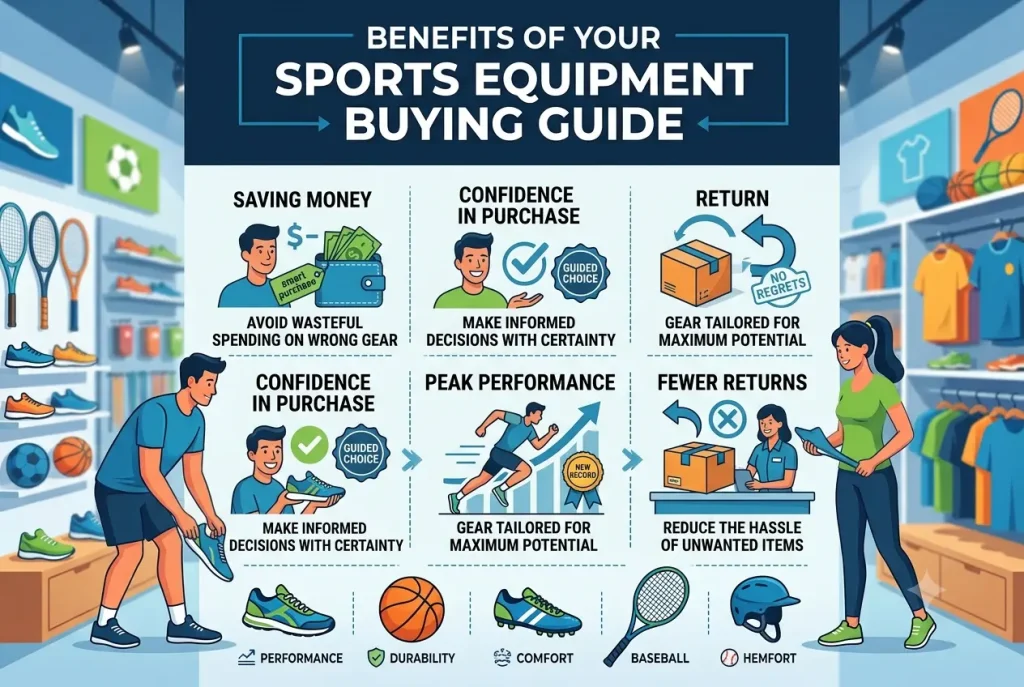
- Helps choose the right equipment
- Prevents unnecessary spending
- Improves athletic performance
- Enhances safety during sports
- Increases equipment lifespan
- Builds buying confidence
- Makes comparing products easier
- Supports long-term fitness goals
- Reduces maintenance costs
- Helps avoid counterfeit products
Disadvantages / Risks
Although using a buying guide is beneficial, there are still some challenges.
- High-quality equipment may cost more initially.
- Product availability may vary by location.
- Popular brands sometimes charge premium prices.
- Beginners may feel overwhelmed by too many choices.
- Online shopping carries the risk of receiving incorrect sizes.
- Some reviews may be misleading or fake.
Understanding these risks helps you make smarter decisions.
Common Mistakes to Avoid
Many buyers make simple mistakes that lead to poor purchases.
void these common errors:
- Buying based only on price.
- Ignoring safety certifications.
- Choosing the wrong size.
- Purchasing equipment that’s too advanced.
- Ignoring warranty information.
- Buying fake branded products.
- Forgetting maintenance requirements.
- Purchasing without comparing multiple options.
- Choosing appearance over quality.
- Ignoring product reviews.
Learning from these mistakes saves both money and frustration.
FAQs
What is the most important factor when buying sports equipment?
Safety and proper fit should always come first. Comfortable and protective equipment helps improve both performance and confidence.
Should beginners buy expensive sports equipment?
Not necessarily. Beginners should choose reliable, affordable equipment until they gain experience and understand their specific needs.
How often should sports equipment be replaced?
Replacement depends on usage, wear, and the type of equipment. Shoes, protective gear, and balls may require more frequent replacement than items like bats or rackets.
Is branded sports equipment always better?
Not always. Many lesser-known brands offer excellent quality at lower prices. Compare features instead of relying only on the brand name.
How can I tell if sports equipment is genuine?
Purchase from trusted retailers, check product packaging, inspect logos and serial numbers, and verify warranty information.
Does expensive equipment improve performance?
High-quality equipment can improve comfort, durability, and consistency, but skill, practice, and proper training remain the biggest factors in athletic success.
Expert Tips & Bonus Points
- Buy according to your current skill level.
- Invest more in safety equipment.
- Replace damaged protective gear immediately.
- Compare at least three products before purchasing.
- Check warranty coverage.
- Look for lightweight yet durable materials.
- Clean equipment after every use.
- Store gear properly to extend its lifespan.
- Upgrade gradually instead of buying everything at once.
- Focus on quality rather than marketing claims.
Bonus Tip:
Keep a checklist of your equipment and inspect it regularly. Small maintenance habits can significantly increase the lifespan of your gear.
Conclusion
Choosing the right sports equipment is an important step toward improving both your performance and overall enjoyment of any sport. A thoughtful approach helps you avoid costly mistakes, ensures better safety, and allows you to get the most value from every purchase. Instead of focusing only on popular brands or expensive products, consider factors such as fit, quality, durability, comfort, and your personal goals.
This Sports Equipment Buying Guide has covered everything from understanding the purpose of sports gear to selecting the correct size, comparing materials, setting a realistic budget, and maintaining your equipment for long-term use. Whether you’re buying your first football boots, upgrading your running shoes, selecting a cricket bat, or investing in fitness accessories, informed decisions will always lead to better results.
Remember that the best equipment is the one that matches your skill level, supports your training, and keeps you safe during every session. Spending a little extra time researching before purchasing can save you money, reduce frustration, and improve your overall sporting experience.
As you continue your athletic journey, regularly evaluate your equipment, replace worn-out items when necessary, and prioritize quality over appearance. With the right gear and consistent practice, you’ll be better prepared to enjoy your favorite sport while reaching your personal performance goals.
